
A Mission-Driven Developer Program: Construction Training Event
As part of our Mission-Driven Developer Program and Last Mile Network initiatives, we designed an event specifically for construction professionals, focusing on utilizing modular construction to build new affordable, mixed-income, and workforce housing in their communities.
Module believes that everyone deserves good design, no matter where you live. That's why we want to expose as many general contractors to our modular construction process as possible.
Attendees traveled from near and far to learn how modular construction can be a powerful tool for building affordable, sustainable housing in their communities. We’re grateful to everyone who made the trip to Pittsburgh and brought curiosity, thoughtful questions, and bold ideas to the table.
Special thanks to Shawn Intagliata, Unico, Biltwise; Johnny Nigrelli, Nigrelli Plumbing and Excavation; Chris Bromley, Trade Institute of Pittsburgh; Megan Krider, FHLB Pittsburgh; and Nathan Culp, First Commonwealth Bank for sharing their expertise and sparking meaningful dialogue throughout the day.

From the factory floor at our Last Mile Facility to candid Q&As with experienced partners, here are some of the key takeaways:
1. Modular as a Mindset Shift
From staging to set day to sequencing, modular rewards planning and discipline. And unlike traditional builds, it leaves little room for improvisation. Get curious. Do your homework. Ask questions.
2. The Design Phase is Critical
In a modular project, every detail, from HVAC systems to stair placement, needs to be resolved upfront. Success starts with clear roles, early collaboration and participation in the design process.
3. Set Day
Set day is fast, complex, and requires coordination. Has the crane operator visited the site? Is the route survey complete to coordinate transportation of the boxes? Is the Set Crew experienced and prepared to adapt? Preparing the site correctly ahead of time and knowing who’s responsible for what makes all the difference.
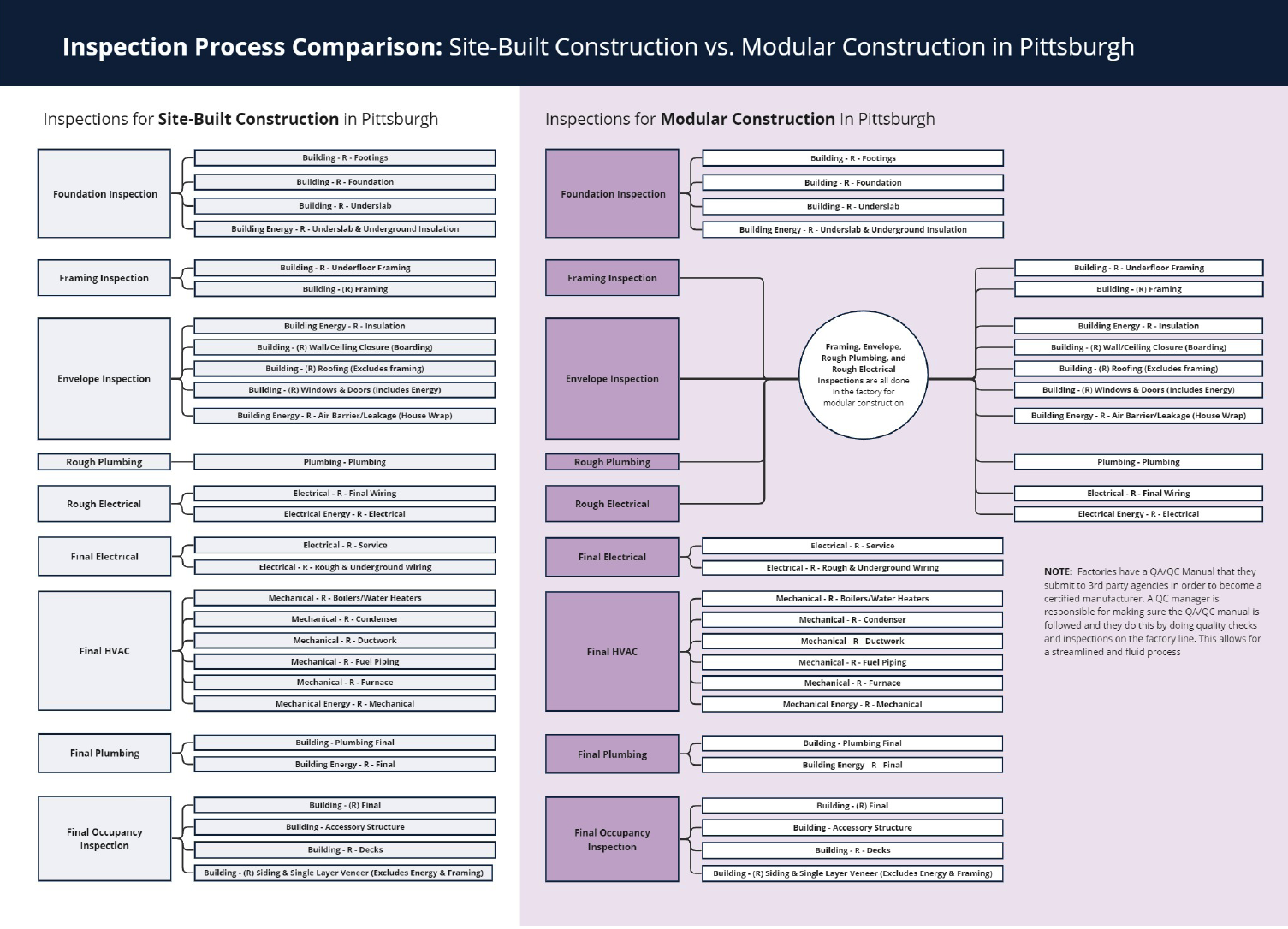
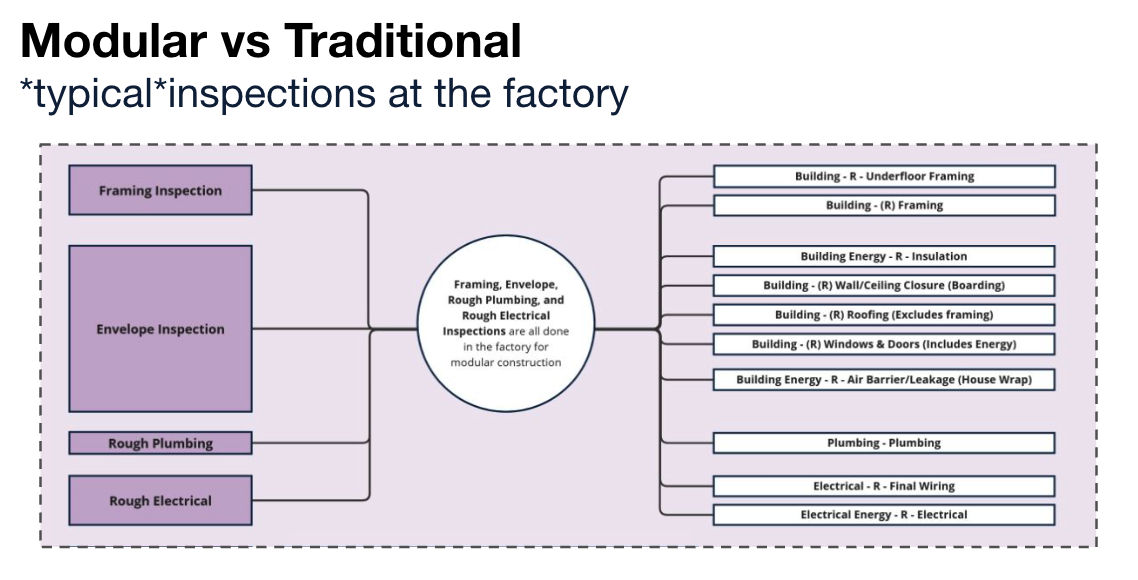
4. What’s Different About the Inspection Process?
Unlike manufactured housing, there is no nationally accepted separate code for offsite construction. Instead, builds must adhere to the traditional International Residential Code (IRC), with each state having its own additional rules and regulations.
A key difference is that state inspections are conducted for all work completed by the factory, in addition to the required city inspections.
The specific inspections that occur at the factory (state) versus on-site (city or county) depend on the regulations of the state, county, and city where the project is located. The factory usually manages the state permitting process, ensuring compliance with state code requirements.
Navigating the permitting process for modular homes can be complex due to varying state and local regulations. The ICC NTA jurisdictions map offers insights into the specific requirements for each state.

And the Building Energy Codes Program (BECP) tracks energy codes at the state level and provides state specific energy code resources, such as fact sheets, cost-effectiveness analyses, compliance reports, and primary contact information. View the interactive map on their website.
Read more about permitting and inspections.
This event was made possible by the Housing Affordability Breakthrough Challenge, led by Enterprise Community Partners with support from the Wells Fargo Foundation.
Partnering with Module
Partnering with Module means delivering energy-efficient homes, healthier environments for residents, and smarter, more sustainable designs that align with the future of housing.
Are you a developer interested in working with Module? Or a GC interested in learning more?